Oodles - Your Trusted Retail ERP Engineering Partner

With over 15 years of technical expertise and 50+ enterprise projects delivered globally, Oodles Technologies engineers retail platforms around the operational realities of modern commerce. Our retail ERP services focus on building integrated, data-driven ecosystems rather than forcing retailers into rigid software configurations.

We architect cloud-native retail environments that connect stores, warehouses, eCommerce platforms, customer data, payment systems, and enterprise finance through secure APIs and event-driven integrations. Our engineering approach combines microservices, AI/ML models, real-time data pipelines, and scalable cloud infrastructure to help retailers establish a unified operational foundation.

Whether you operate physical stores, digital commerce channels, marketplaces, or an omnichannel network, our retail ERP services are designed to provide centralized control while allowing individual business units to operate with the flexibility required by their markets.
Oodles Retail ERP Engineering Partner

Core Capabilities of Our Retail ERP Services

Our retail ERP services connect core commerce operations with intelligent automation, analytics, and AI-driven decision-making. We design modular architectures that allow retailers to scale functionality without rebuilding their entire technology ecosystem.

Intelligent Inventory Management

Build centralized inventory architectures that synchronize stock levels across warehouses, stores, fulfillment centers, and eCommerce channels. AI-driven inventory models can identify slow-moving products, detect stock discrepancies, and recommend replenishment actions based on real-time inventory signals.

AI-Powered POS Integration

Connect POS systems with ERP, CRM, payment gateways, loyalty platforms, and eCommerce environments through secure APIs and event-driven middleware. Our AI POS Integration Services can help identify transaction anomalies, personalize offers, and synchronize sales data with centralized financial and inventory systems.

Customer Behavior Intelligence

Integrate customer transaction history, browsing activity, loyalty interactions, purchase frequency, and engagement signals into unified customer profiles. AI models can segment customers and identify behavioral patterns to support personalized campaigns, retention strategies, and merchandising decisions.

AI Demand Forecasting

Deploy machine learning models that analyze historical sales, seasonality, promotions, pricing, geographic demand, and external variables to generate more responsive demand forecasts. This helps retailers improve purchasing decisions and align inventory availability with expected demand.

Retail Analytics & Decision Intelligence

Establish centralized data models and BI pipelines that transform operational data into real-time dashboards covering sales performance, inventory turnover, margins, store productivity, fulfillment efficiency, and customer trends.

Our retail ERP services are designed to replace disconnected retail workflows with an integrated architecture where operational data can move securely between systems and intelligent applications.

Industry-Specific Retail ERP Deployments

We engineer retail ERP environments around different product categories, sales channels, transaction volumes, and operational models.

Fashion & Apparel

Connect POS, warehouse, eCommerce, and merchandising systems to manage SKU-level inventory across sizes, colors, collections, and locations. AI forecasting can identify seasonal demand patterns and support allocation decisions before inventory reaches critical levels.

Fashion and Apparel Retail

Grocery & FMCG

Implement real-time inventory synchronization, barcode-based workflows, supplier integrations, and demand forecasting to manage high-volume transactions and products with variable demand or shelf-life constraints.

Grocery and FMCG Retail

Consumer Electronics

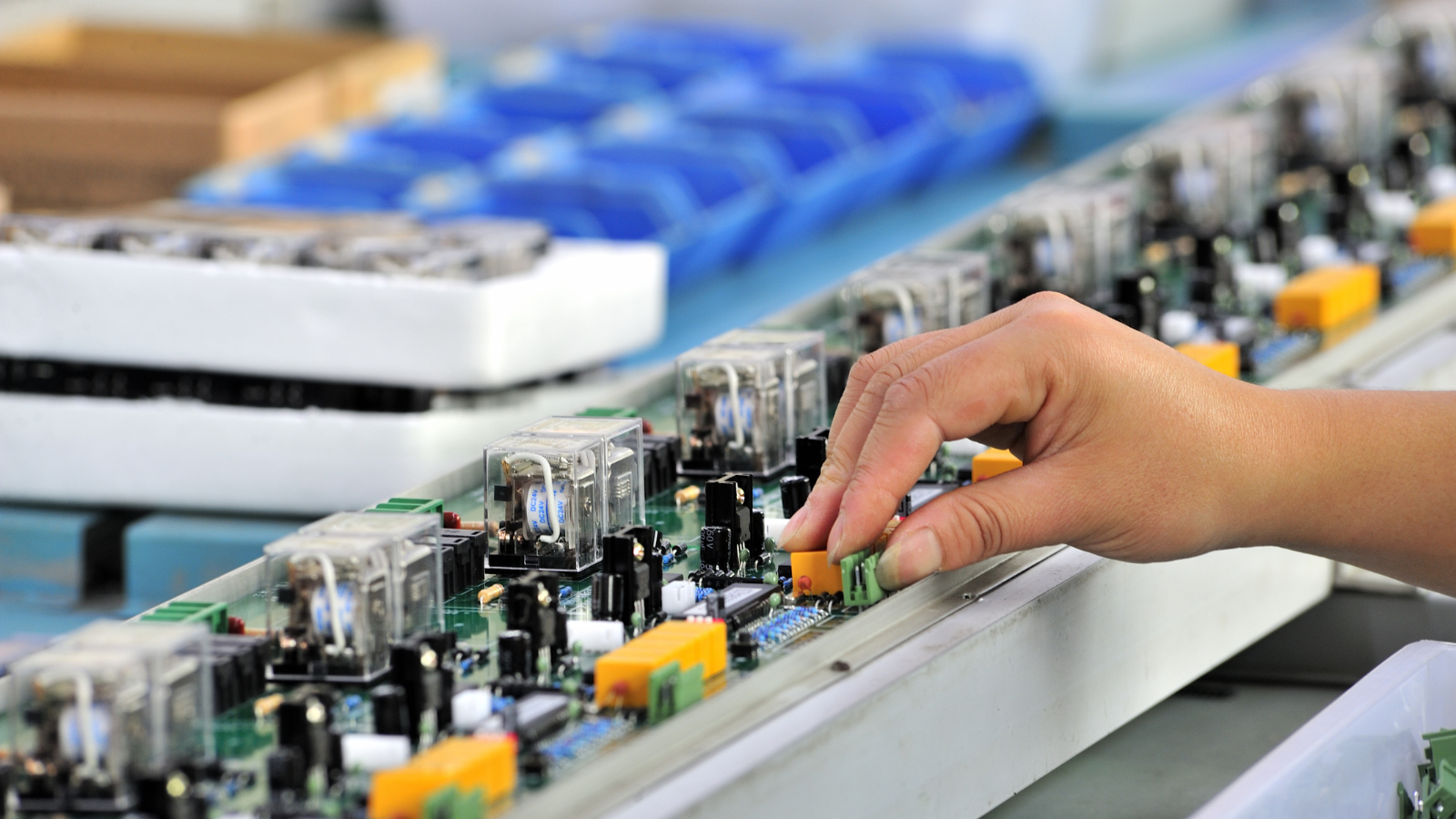
Integrate product catalogs, warranty information, POS transactions, warehouse systems, and customer records while using predictive analytics to identify product demand and potential inventory imbalances.
Consumer Electronics Retail

Omnichannel Retail

Establish a unified operational layer connecting stores, marketplaces, mobile applications, websites, warehouses, and fulfillment providers so customers can receive consistent pricing, inventory visibility, and order experiences across channels.

Omnichannel Retail

These implementations demonstrate how ERP in retail can evolve from a transactional back office into an intelligent operational layer connecting every major retail touchpoint.

Engineered From the Ground Up: How We Work

Our retail ERP services follow a structured engineering lifecycle designed to minimize operational disruption while creating a scalable foundation for future retail automation.

1. Retail System Discovery

Our architects audit existing POS, ERP, CRM, WMS, eCommerce, payment, and marketplace systems to identify data dependencies, integration gaps, operational bottlenecks, and duplicate workflows.

2. Architecture & Data Modeling

We define the target architecture, entity relationships, API contracts, event schemas, data flows, and integration patterns required to establish a unified retail data environment.

3. AI & Automation Engineering

Our developers integrate machine learning and AI capabilities using technologies such as Python, TensorFlow, PyTorch, LangChain, cloud AI services, and vector databases where appropriate. Models can support demand prediction, customer segmentation, anomaly detection, and inventory optimization.

4. Integration & Agile Development

We develop modular services using technologies such as Node.js, Python, Java, REST APIs, GraphQL, Kafka, Redis, Docker, and Kubernetes. Systems are developed incrementally through controlled sprints and integration testing.

5. Testing, Deployment & Optimization

Before production deployment, we perform API testing, security validation, load testing, data reconciliation, and performance optimization. Post-launch monitoring and CI/CD practices help the architecture scale as transaction volumes and retail channels expand.

Modern retail requires more than connecting applications. It requires an architecture capable of processing high-volume transactions, maintaining consistent data, and turning operational signals into timely decisions.

Why Partner With Oodles for Retail ERP Services

Our retail ERP services are engineered around the requirements of modern commerce: high-volume transactions, consistent data, and operational signals turned into timely decisions.

Unified Retail Architecture

Connect ERP, POS, CRM, WMS, eCommerce, marketplaces, payment gateways, and analytics platforms through centralized integration layers.

AI-Ready Infrastructure

Build data pipelines and application architectures capable of supporting machine learning, generative AI, predictive analytics, and intelligent automation.

Real-Time Data Synchronization

Use APIs, event-driven architecture, Kafka, Redis, and asynchronous processing to synchronize high-volume retail events with minimal dependency between systems.

Scalable Cloud Deployment

Deploy modular retail applications across AWS, Azure, or other cloud environments using Docker, Kubernetes, serverless components, and automated CI/CD pipelines.

Operational Intelligence

Convert sales, inventory, customer, and fulfillment data into actionable insights for merchandising, replenishment, pricing, and operational planning.

Integration Flexibility

Connect existing retail infrastructure without requiring organizations to replace every legacy system. Secure middleware and API layers can progressively modernize the technology landscape.

Our objective is to make retail ERP services an operational foundation for continuous modernization rather than another isolated software deployment.

With the right architecture, intelligent retail infrastructure can support new stores, digital channels, product categories, and customer experiences without creating another layer of fragmented technology.

Securing Your Intelligent Retail Infrastructure

Retail environments process sensitive customer, payment, transaction, and operational information across multiple systems. Our architectures incorporate role-based access control, API authentication, encryption, audit logging, secure data pipelines, and controlled service-to-service communication to protect critical retail workloads.

We design systems around principles such as least-privilege access, data segmentation, secure API gateways, observability, and automated monitoring. This enables retailers to expand AI and automation capabilities while maintaining governance over the data and systems powering their operations.

Secure Intelligent Retail Infrastructure

Accelerate Intelligent Retail Transformation. Move beyond disconnected POS, inventory, CRM, and commerce systems with retail ERP services engineered for real-time operations, predictive decision-making, and scalable omnichannel growth.

Frequently Asked Questions

What are retail ERP services?
Retail ERP services involve designing, developing, integrating, and optimizing enterprise resource planning systems specifically for retail operations. They can connect inventory, POS, purchasing, finance, customer data, warehouses, eCommerce, and analytics within a unified technology architecture.
What is ERP in retail used for?
ERP in retail is used to centralize operational data and coordinate processes such as inventory management, purchasing, sales, finance, warehouse operations, supplier management, and customer-related workflows. Modern architectures can also incorporate AI for forecasting, automation, anomaly detection, and decision support.
Can retail ERP integrate with existing POS systems?
Yes. Retail ERP platforms can integrate with existing POS environments through REST APIs, GraphQL, webhooks, event streaming, and middleware. This allows sales, payment, inventory, product, and customer data to synchronize between stores and centralized enterprise systems.
What is CRM ERP integration for retail businesses?
CRM ERP integration connects customer information and interactions from CRM platforms with operational data maintained in ERP systems. A retailer can use this architecture to combine purchase history, customer profiles, loyalty activity, inventory availability, and order information for more personalized customer experiences.
How does intelligent inventory management improve retail operations?
An Intelligent Inventory Management System combines real-time stock data with historical transactions, demand signals, replenishment rules, and predictive analytics. It can help retailers identify inventory imbalances, recommend replenishment, reduce stockouts, and improve visibility across stores and warehouses.
Can AI be used to understand customer behavior?
Yes. AI Consumer Insights Services can analyze transaction history, product interactions, browsing behavior, loyalty activity, purchase frequency, and other permitted customer signals. Machine learning models can then identify customer segments, purchasing patterns, churn indicators, and product affinities.
What are AI POS Integration Services?
AI POS Integration Services connect point-of-sale systems with ERP, CRM, inventory, payment, and analytics platforms while adding intelligent processing capabilities. Depending on the use case, AI can support transaction anomaly detection, customer segmentation, offer personalization, and real-time sales analysis.
How does AI demand forecasting work in retail?
AI Demand Forecasting Services use machine learning models to analyze historical sales alongside variables such as seasonality, promotions, pricing, geography, product lifecycle, and demand patterns. The resulting forecasts can support purchasing, replenishment, allocation, and inventory planning.
What technologies are used to build retail ERP systems?
Retail ERP services can use technologies including Python, Node.js, Java, PostgreSQL, Redis, Kafka, Docker, Kubernetes, AWS, Azure, REST APIs, GraphQL, and cloud-native data platforms. AI implementations may additionally use TensorFlow, PyTorch, LangChain, vector databases, and managed cloud AI services based on the business requirement.
Can retail ERP systems support omnichannel operations?
Yes. A properly architected retail ERP can connect physical stores, eCommerce websites, marketplaces, mobile applications, warehouses, fulfillment providers, and customer systems. Event-driven integrations allow changes such as sales, returns, stock movements, and order updates to propagate across connected channels.
How long does retail ERP development take?
The timeline depends on the number of stores, integrations, business processes, data migration requirements, customization scope, and AI capabilities. A phased implementation can allow core inventory, POS, finance, or integration capabilities to go live progressively rather than waiting for the entire platform to be completed.
Do you provide post-launch support for retail ERP systems?
Yes. Post-launch retail ERP services can include application monitoring, infrastructure scaling, API maintenance, security updates, CI/CD management, performance optimization, data pipeline monitoring, and refinement of AI models as operational data grows.